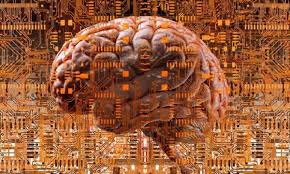
Deep learning is a subset of machine learning that focuses on algorithms inspired by the structure and function of the human brain, known as artificial neural networks. Unlike traditional machine learning, deep learning excels at automatically discovering patterns in data, making it particularly effective for tasks such as image recognition, natural language processing, and speech recognition.
The core of deep learning lies in neural networks, which consist of layers of interconnected nodes or “neurons.” Each neuron processes input data, applies a mathematical transformation, and passes the result to the next layer. Networks can have many hidden layers, which allow them to learn complex representations of data. This depth of layers is why the approach is called “deep” learning.
Training a deep learning model involves feeding it large amounts of data and adjusting the weights of the connections between neurons based on the error in predictions. Techniques such as backpropagation and gradient descent are used to minimize the loss function and improve the model’s accuracy. One key advantage of deep learning is its ability to automatically extract features from raw data, removing the need for manual feature engineering.
Common applications of deep learning include computer vision, where convolutional neural networks (CNNs) are used to detect and classify objects in images, and natural language processing (NLP), where recurrent neural networks (RNNs) and transformers help understand and generate human language. Deep learning models also power recommendation systems, autonomous vehicles, and predictive analytics.
Despite its power, deep learning comes with challenges. Training deep networks often requires large datasets and significant computational resources. Overfitting, where a model performs well on training data but poorly on unseen data, can occur if the network is too complex for the available data. Regularization techniques, dropout layers, and careful hyperparameter tuning help mitigate these issues.
The rise of deep learning has been fueled by advances in hardware, such as GPUs and TPUs, which enable faster training, and by frameworks like TensorFlow and PyTorch, which simplify model development. Researchers and practitioners continually explore new architectures and methods, such as attention mechanisms and generative models, to push the boundaries of AI capabilities.
In summary, deep learning is a transformative technology that allows machines to learn complex patterns from data. Its ability to automate feature extraction, combined with advancements in computational power, makes it an essential tool for modern AI applications. Professionals seeking to leverage AI effectively must understand the principles of deep learning and the practical considerations for designing, training, and deploying deep neural networks.
References
1. Goodfellow, I., Bengio, Y., & Courville, A. Deep Learning. MIT Press, 2016.
2. LeCun, Y., Bengio, Y., & Hinton, G. Deep Learning. Nature, 2015.
3. Chollet, F. Deep Learning with Python. Manning, 2018.
4. TensorFlow Documentation: https://www.tensorflow.org/
5. PyTorch Documentation: https://pytorch.org/