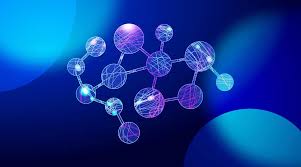
Neural networks are the foundation of modern artificial intelligence and deep learning. Inspired by the human brain, a neural network consists of interconnected nodes called neurons, organized in layers. Each neuron processes input data, applies a mathematical function, and passes the output to the next layer.
1. Structure of Neural Networks
A basic neural network has three main layers:
• Input layer: Receives the initial data. Each neuron represents one feature of the data.
• Hidden layer(s): Intermediate layers that extract patterns and relationships from the input. Networks can have multiple hidden layers, known as deep networks.
• Output layer: Produces the final prediction or classification.
Connections between neurons have weights that determine the importance of each input. Adjusting these weights through training allows the network to learn patterns in the data.
2. Activation Functions
Activation functions introduce non-linearity into the network, allowing it to solve complex problems. Common activation functions include:
• Sigmoid: Outputs a value between 0 and 1, often used for binary classification.
• ReLU (Rectified Linear Unit): Efficient for deep networks, outputs zero for negative inputs and linear for positive inputs.
• Softmax: Converts output into probabilities for multi-class classification.
3. Training Neural Networks
Neural networks learn through a process called backpropagation, combined with an optimizer like stochastic gradient descent (SGD). During training:
1. The network predicts an output for each input.
2. The loss function calculates the difference between predicted and actual values.
3. The network adjusts its weights to reduce the loss iteratively.
4. Applications
Neural networks are widely used in areas such as:
• Image and speech recognition
• Natural language processing
• Autonomous vehicles
• Recommendation systems
Their ability to model complex relationships makes them indispensable in AI development.
Conclusion
Understanding the basics of neural networks is crucial for any AI practitioner. By mastering the structure, activation functions, and training methods, developers can build efficient models for a wide variety of applications. Neural networks provide the computational framework that powers modern AI technologies, from self-driving cars to language translation.
References
1. Neural Networks and Deep Learning, Michael Nielsen (link)
2. Introduction to Neural Networks, Towards Data Science (link)
Neural Networks for Beginners, FreeCodeCamp (link)